pggraph
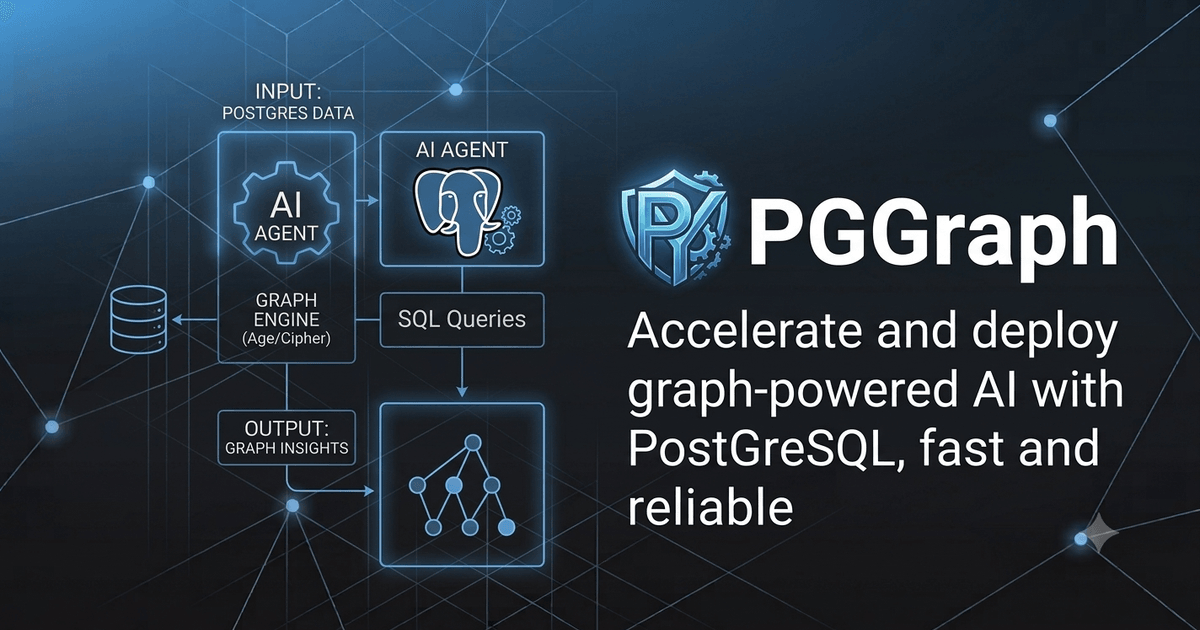
A linear, one-concept-per-lesson path through pggraph, the Postgres extension that compiles graph traversal and GQL/Cypher pattern matching on top of ordinary Postgres tables, from registering your first table as a node to a relationship-aware context API for AI agents. 29 lessons · 3 tiers.
Prerequisites: Comfortable writing basic Python. Pairs naturally with pgvector (same 'add a superpower to Postgres' pattern) but doesn't depend on it, either order works.
No AI model calls in this course, it's pure Postgres and Python. Setup needs a local Postgres with the pggraph extension, run via `docker compose up -d` from the project root (a separate container from pgvector's, if you've also done that course), exposed on localhost:5434, database name fixed to `graph` (pggraph's own image requires it).
Built on pggraph, the Postgres extension this course teaches.
Beginner
Registering tables, building a graph, and basic queries.
Intermediate
Multi-hop traversal, paths, filters, and staying in sync.
Advanced
GQL/Cypher, components, maintenance, and the capstone.
- 20Connected ComponentsGitHub
- 21GQL QueriesGitHub
- 22GQL Writes and the Mutable OverlayGitHub
- 23Cypher CompatibilityGitHub
- 24Async Builds and MaintenanceGitHub
- 25Sync Policies and Scheduled JobsGitHub
- 26Multi-Graph and TenancyGitHub
- 27Access Control and QuotasGitHub
- 28Monitoring Graph HealthGitHub
- 29Capstone: A Relationship-Aware Context APIGitHub