Most Tech Writing Explains What. This Is About Why.
I write about what actually happens inside engineering orgs. Not the polished version.
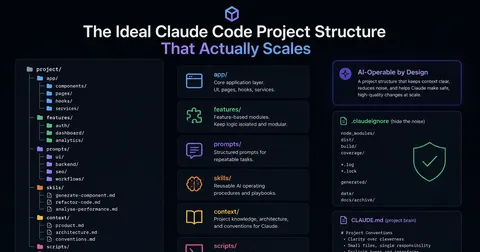
Claude Code Project Structure That Actually Scales: Patterns, Templates & Real Examples
A battle-tested blueprint for Claude Code projects that stay predictable at 50+ files - folder layout, .claudeignore, skills architecture, and 3 ready-to-copy templates.
Read article →
LLMs Think Too Much for Jobs That Don't Require Thinking
Autoregressive generation is deliberation by construction. LLMs are System 2 architecture running System 1 jobs, and most automation pays that bill needlessly.
Read article →
What Actually Changes When an Org Goes AI-Native (Three Things, Not Fifty)
Deloitte spent $3B and touched 181,500 employees renaming roles, then told staff the actual work would stay the same. A three-part test for telling AI-native rebrand from real structural change.
Read article →
The Talent Density Trap: When 'Only A-Players' Becomes the Excuse
Talent density is a real strategy, not just a slogan - but leaders use it to skip the coaching and process work that makes any team durable. Here's the unit-economics case, with Netflix and AWS as the two working models.
Read article →
Most Recruiters Disappear the Day You Sign. A Few Don't.
Zero times a recruiter has asked how a placement actually turned out. Hiring is structurally asymmetric - the good ones counterbalance it anyway.
Read article →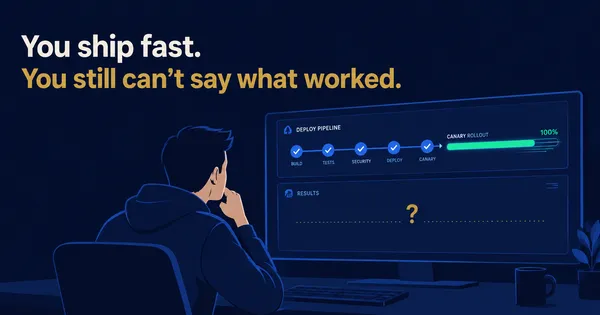
You Ship Fast. You Still Can't Say What Worked.
Deploy frequency measures how fast you ship, not whether it mattered. A staged-evaluation gate borrowed from how AI labs test capability closes that gap.
Read article →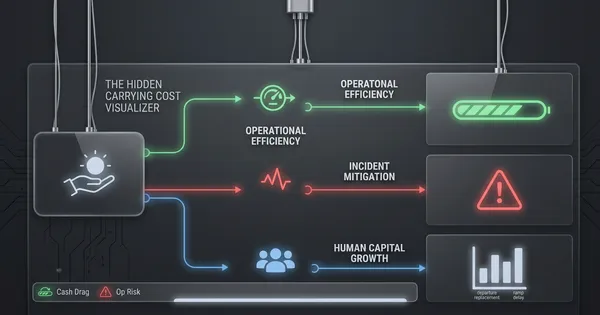
How Private Equity Actually Works
Private equity firms don't pick stocks, they become the company for five to eight years. A plain-English walk through LPs, buyouts, the fund lifecycle, and how the fees actually work.
Read article →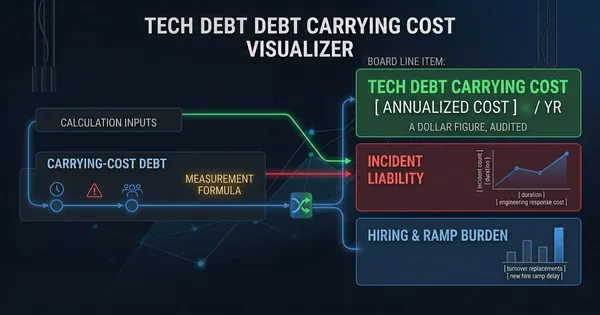
Technical Debt Isn't a Feeling. It's a Carrying Cost.
Technical debt isn't unmeasurable, it's unmonetized. A framework that turns velocity tax, incident cost, and hiring drag into one carrying cost a CFO can fund.
Read article →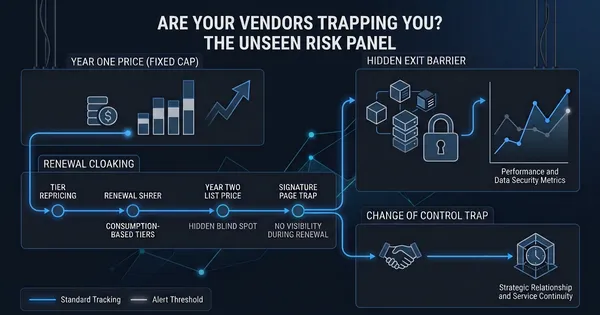
The Vendor Contract Red Flags Most Technical Leaders Miss
A fair price at signing doesn't make a fair contract. Auto-renewal windows, price-lock expiration, data portability, and change-of-control clauses decide what it actually costs.
Read article →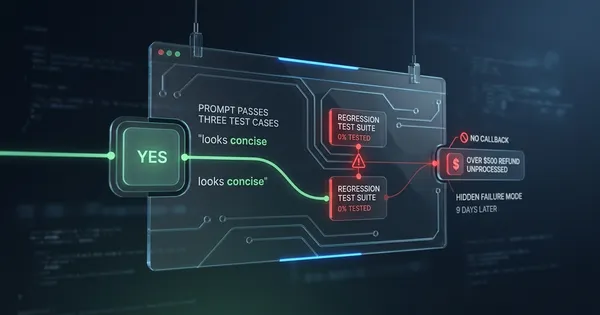
The Eval Suite Is the Prompt
A one-word prompt edit broke refund escalation for nine days. Why AI agent prompts need a versioned regression suite, not a glance in a playground window.
Read article →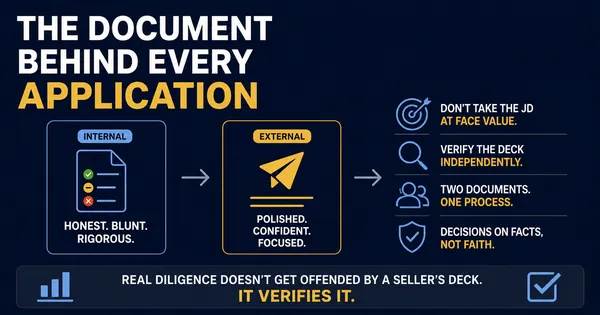
Reading a Job Description Like a Due Diligence Document
A job posting is a pitch deck, not audited information. A requirement-by-requirement evidence framework, borrowed from M&A due diligence, for evaluating roles honestly.
Read article →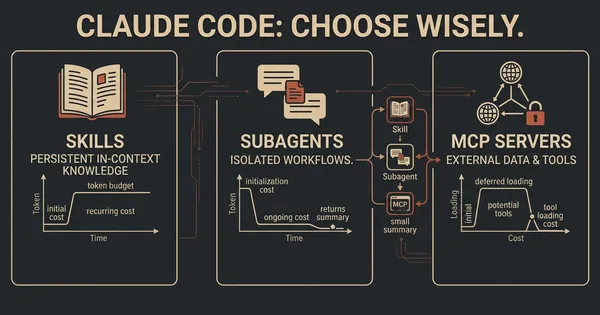
Claude Code Skills vs Subagents vs MCP Servers: When to Use Which
Skills, subagents, and MCP servers aren't tiers of the same capability - they solve three different context-cost problems. A primary-sourced decision framework.
Read article →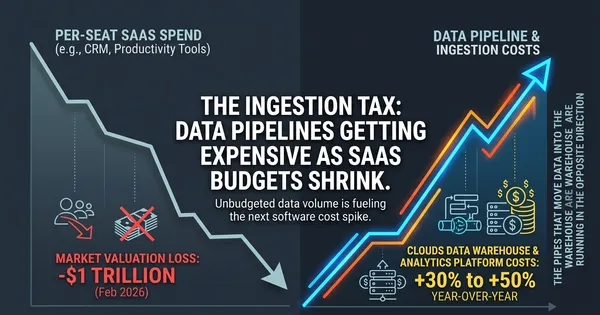
The Data Loader Paradox: Why ELT Got More Expensive During the SaaSpocalypse
SaaS spend is contracting, but data ingestion costs rose 30-50% in a year. Fivetran's connector-level repricing, the dbt merger, and the real build-vs-buy math.
Read article →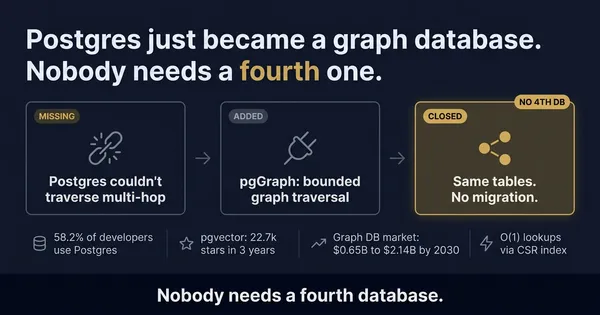
Postgres Just Became a Graph Database. Nobody Needs a Fourth One.
pgGraph adds bounded graph traversal to plain PostgreSQL tables, no migration, no new database required. Here is what changes, and what still does not.
Read article →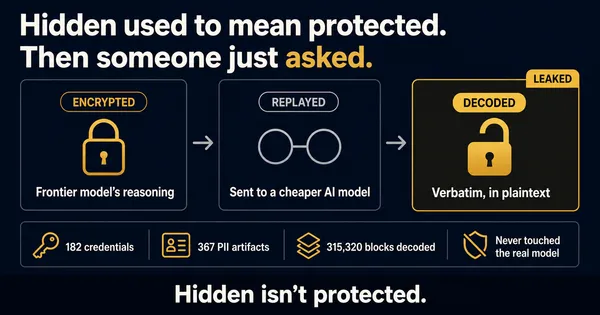
Ask the Cheap AI What the Expensive One Was Thinking
A cheap AI model will decrypt its expensive sibling's hidden reasoning if you just ask. Here's what that means for AI vendor risk and technical due diligence.
Read article →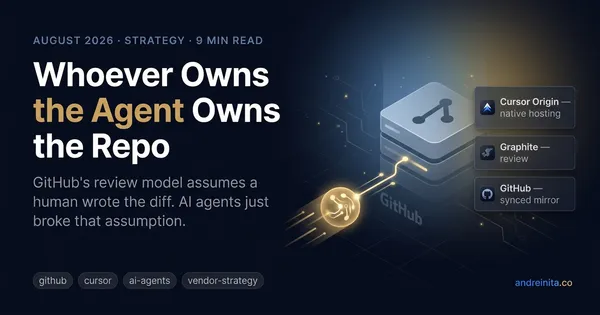
Whoever Owns the Agent Owns the Repo
GitHub's PR-review model assumes a human wrote the diff. Now that AI agents write a quarter to nearly half of new code, the system of record has to follow the system of action, and GitHub doesn't own it.
Read article →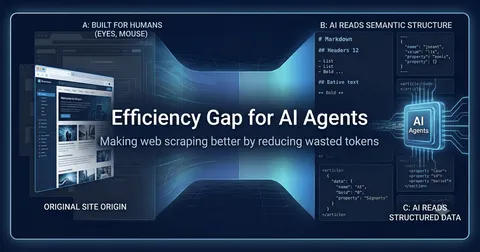
90% of What Your AI Agent Scrapes Is Wasted Tokens
A typical web page runs 80,000 tokens once a model reads the raw HTML. Over 90% of that is CSS, JavaScript, and markup an agent will never quote. Here's how to stop paying for it.
Read article →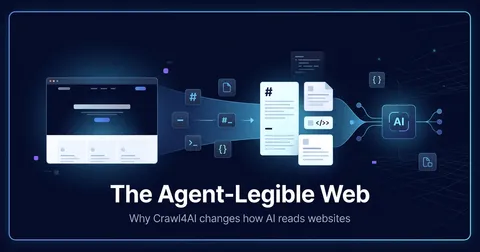
BeautifulSoup Scrapes Pages. Crawl4AI Assumes No One Reads Them.
Crawl4AI hit 75,000 GitHub stars in three years, faster than Scrapy did in eighteen. The reason isn't a better scraper. It's that access and legibility are different problems.
Read article →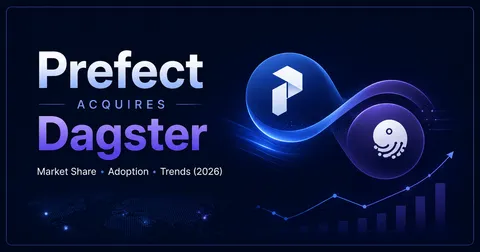
Prefect Bought Dagster. Airflow Still Has More Stars Than Both Combined.
Prefect acquired Dagster this week. Combined GitHub stars and PyPI downloads for both still trail Apache Airflow alone. Here's what the deal actually changes.
Read article →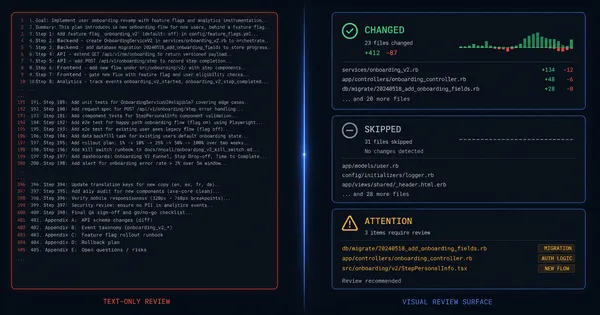
Why AI-Generated Plans Need Visual Review, Not More Text
AI solved the generation problem and created the comprehension problem. The bottleneck is no longer output volume. It is review surface area.
Read article →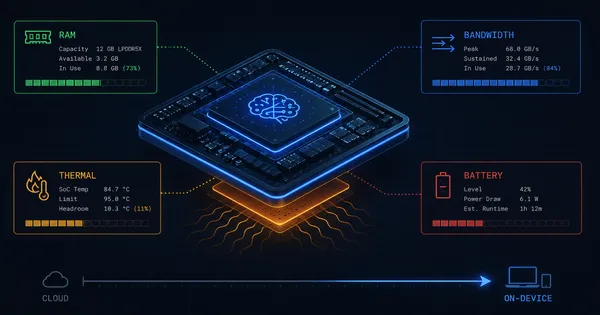
On-Device AI Comes of Age, but Hardware Still Sets the Limits
Compact models run offline on phones, laptops, and edge devices. The bottleneck is no longer model capability. It is RAM, memory bandwidth, and thermal headroom under sustained load.
Read article →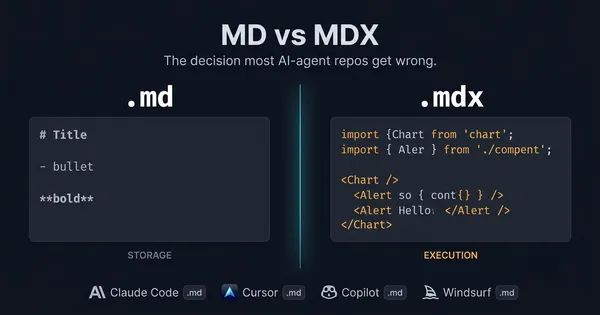
MD vs MDX: The Decision Most AI-Agent Repos Get Wrong
Markdown is a storage format. MDX is an execution format. Every AI coding tool chose .md for agent instructions. The distinction explains why, and when MDX earns its place.
Read article →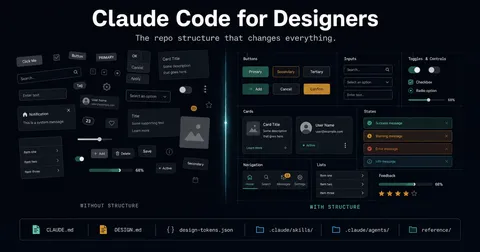
Claude Code for Designers: Why Most Still Aren't Using AI (and the Repo That Changes That)
74% of AI coding tool users report meaningful productivity gains. Most designers are not in that number. The blocker is not skills or fear. It is project structure. A complete designer-ready Claude Code repo with DESIGN.md, design tokens, skills, agents, and a weekend setup guide.
Read article →
Airflow in 2026: The Orchestrator That Became the Operating System for Data
Comprehensive Apache Airflow analysis: open source and every managed vendor (Astronomer, Cloud Composer, MWAA), pricing at three scales, Airflow 3.0 migration, operational pain points, AI workflows, and a decision matrix for choosing the right deployment.
Read article →
Dagster in 2026: The Orchestrator That Treats Data as the Product
Comprehensive Dagster analysis: pricing, asset-centric orchestration, AI/ML pipelines, learning curve, integrations, and why treating data as the product gives teams lineage and governance that task-centric orchestrators cannot match.
Read article →
Prefect in 2026: The Orchestrator Built for AI Workflows
Comprehensive Prefect analysis: pricing, scaling, deployment architecture, integrations, learning curve, and why its dynamic Python-native control flow fits AI agent workflows better than static DAG orchestrators.
Read article →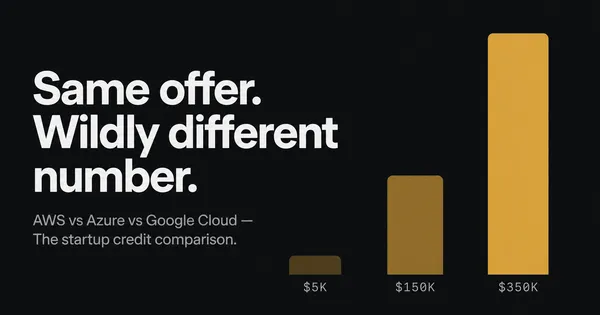
The Startup Cloud Credits Comparison No One Runs: AWS vs Azure vs Google Cloud
AWS, Azure, and Google Cloud all court startups with credits. The real comparison isn't compute pricing - it's who pays you more, who locks you in harder, and what happens when the subsidy ends.
Read article →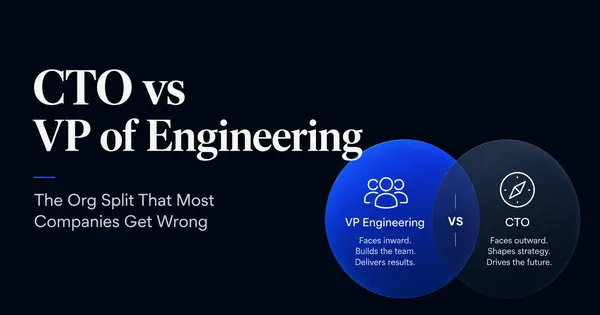
CTO vs VP of Engineering: The Org Split That Most Companies Get Wrong
The structural signal for splitting CTO and VP Engineering roles isn't headcount — it's a specific week when strategy and delivery both need full attention. A founder's decision framework with real failure modes.
Read article →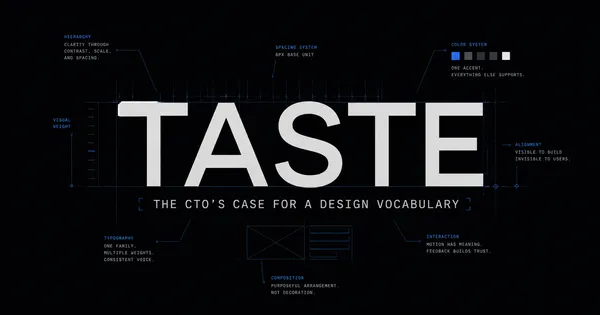
Why AI-Generated UI Looks Generic - and What CTOs Do About It
AI generates competent, generic UI by default. The CTO who builds a design vocabulary can direct it - and the compounding effect touches every product decision.
Read article →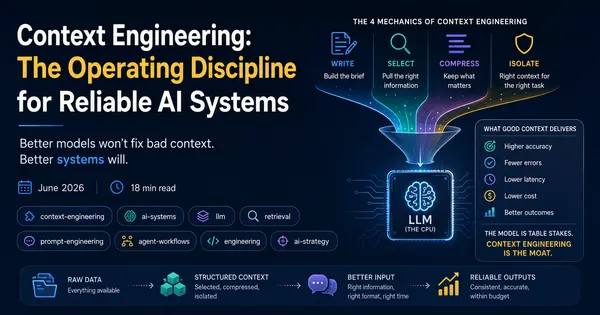
Context Engineering: The Operating Discipline for Reliable AI Systems
Why AI output depends on how teams assemble and retrieve context - not on prompting. A 7-metric measurement framework with 8 charts for engineering teams.
Read article →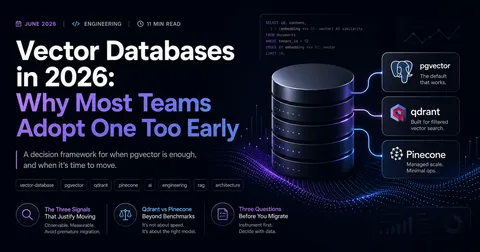
Vector Databases in 2026: Why Most Teams Adopt One Too Early
Most teams adopt a dedicated vector database before the production signals that justify it arrive. A decision framework for when pgvector stops being enough.
Read article →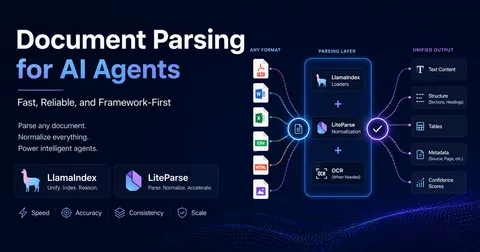
Document Parsers for Agentic Workflows: LiteParse, LlamaParse, and the Tools That Actually Matter
Benchmark-driven comparison of the 2026 document parsing landscape - LiteParse, LlamaParse, Unstructured, Docling, PyMuPDF, Google Document AI - with Python code, failure modes, and an async routing architecture.
Read article →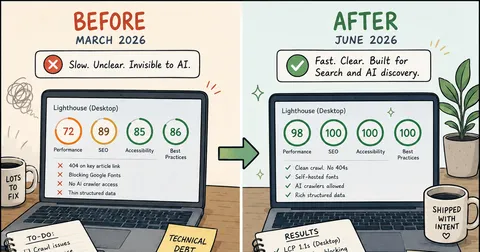
LLM SEO: Rank in Google and Get Cited by AI Search in 2026
Three-wave audit that serves Google ranking and LLM citation simultaneously - fix crawl health, add entity disambiguation in structured data, and open AI crawler channels.
Read article →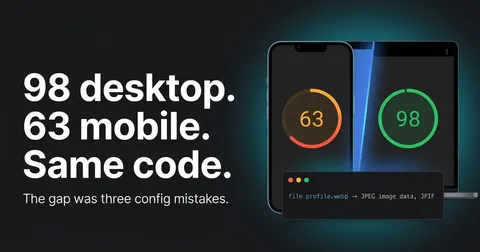
Improving PageSpeed Insights Score: 17 Points Gained, Every Fix Documented
A real audit case study - three rounds, 17 mobile score points gained, every fix shown. The systematic PageSpeed Insights approach that catches what visual QA misses.
Read article →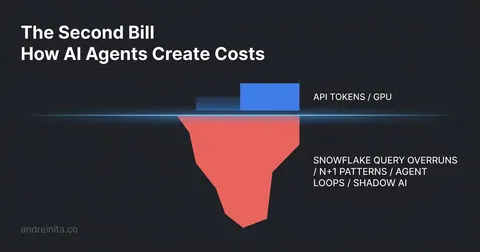
The Second Bill: How AI Agents Create Costs Your FinOps Team Can't See
AI agents create a second bill: invisible to FinOps, landing on the wrong invoice, and breaking every financial model built for linear AI costs.
Read article →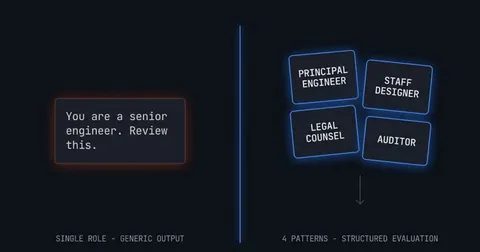
You Are a Senior Engineer: Why That Prompt Is Wrong
Expert persona prompting reduces factual accuracy by 3.6 points. Here are the four patterns that actually work - with a decision table and real session data.
Read article →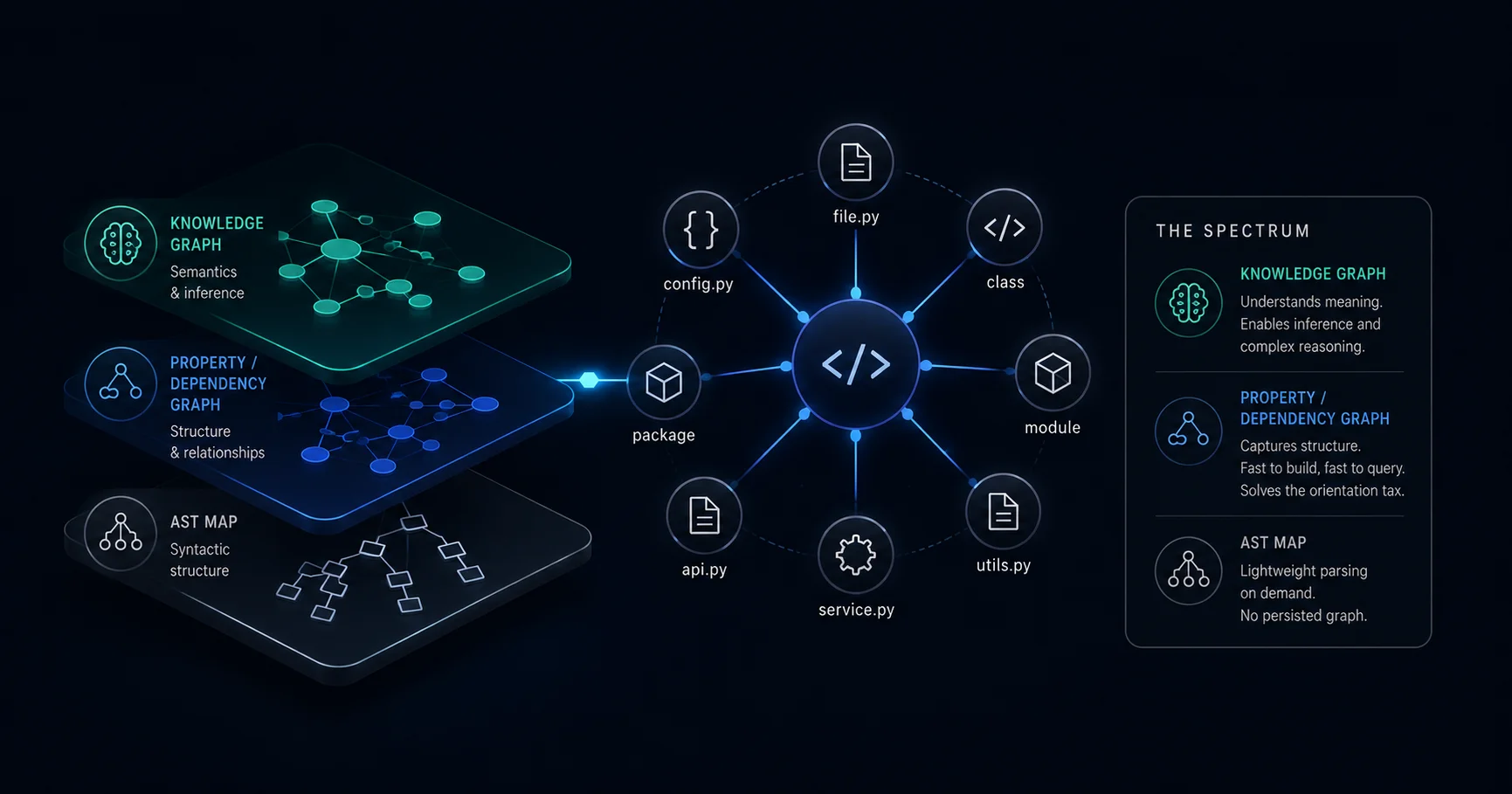
Knowledge Graphs for AI Coding: What the Tools Actually Build (and What I Measured)
Most tools marketed as knowledge graphs for AI coding are dependency graphs. I built three production KGs, ran the experiments on LangChain, and the results were not what the vendors claimed.
Read article →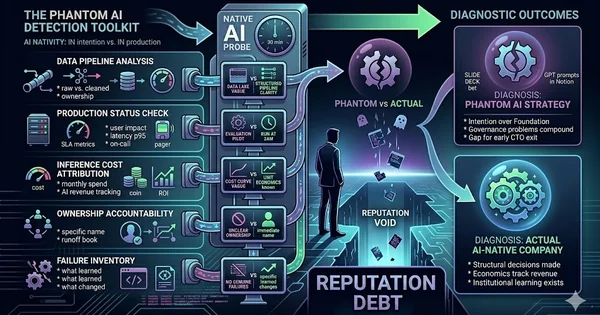
The Phantom AI Strategy: How to Tell in 30 Minutes if a Company Is Actually AI-Native
Every company says it's AI-first. After 30+ CTO interviews, I can tell you exactly which questions reveal the ones that aren't - and what the real ones say instead.
Read article →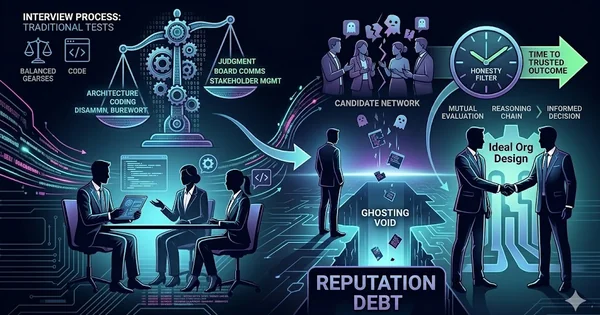
Why Companies Keep Losing the Best CTOs Before They Even Make an Offer
After 30+ CTO interviews in three months, I can tell you exactly where the best processes broke - and what the exceptional ones did differently.
Read article →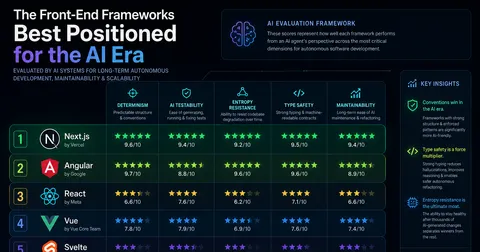
Which Frontend Framework Wins in the AI Era
Framework choice is no longer about developer ergonomics. In an AI-driven era, the winners will be frameworks that resist entropy, enforce constraints, and scale safely under continuous AI modification.
Read article →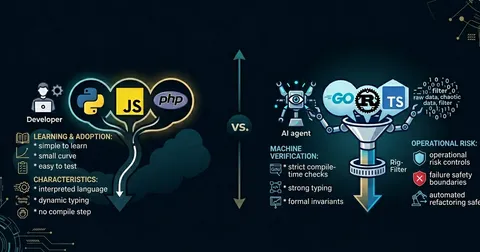
The AI Coding Shift: Why Strongly-Typed and Compiled Languages May Win
For 30 years, language choice was driven by developer productivity. AI changes the equation. When machines generate code, verification matters more than velocity.
Read article →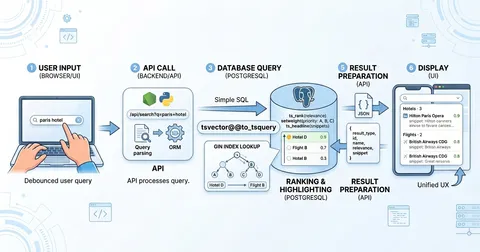
You Probably Don't Need Elasticsearch for Global Search
PostgreSQL's built-in full-text search can handle global search for most SaaS applications. Learn when Postgres is enough and when Elasticsearch makes sense.
Read article →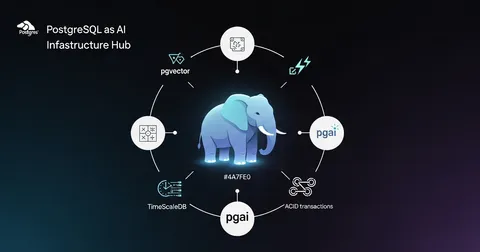
Why PostgreSQL Is Your Best Bet for AI Projects (And You Probably Already Have It)
Stop over-engineering AI infrastructure. PostgreSQL already has everything you need: pgvector for embeddings, pgai for automation, TimeScaleDB for metrics. Build faster by using what you have.
Read article →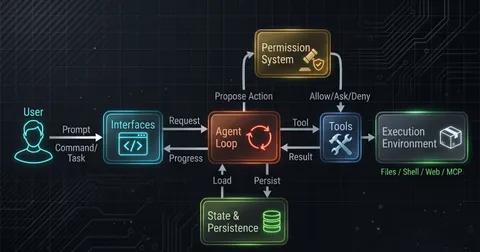
The 2% Problem: Why AI Harness Beats Model Capability
Production AI systems are 98% harness, 2% model. New research reveals why architecture, permissions, and safety matter more than model capability - and how to build systems that actually work.
Read article →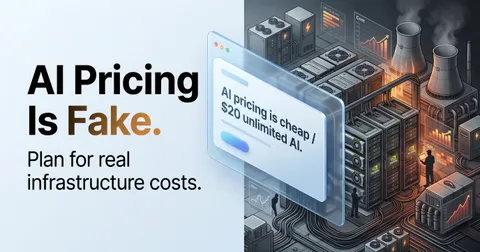
AI Pricing Is Fake. Plan for Real Costs.
Most AI planning assumes today's subsidized pricing is permanent. It isn't. Here's what real costs look like, and why companies designing for tomorrow will win.
Read article →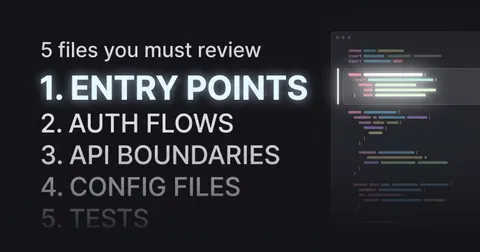
The 5 Files You Must Still Review in the Age of AI-Generated Code
AI writes 80% of my code. I still review 100% of these 5 file types. A blast-radius framework ranking what to review line-by-line, and what to trust.
Read article →
The Haiku-First Engineer: Why Smaller Models Make You Better at Building
Smaller, constrained AI models force clarity and structure. I build faster with Haiku than Opus because constraints eliminate bad habits. Here's why.
Read article →
How to Build a Systematic, AI-Assisted Personal Content Strategy from Scratch
A platform-agnostic how-to for building a disciplined personal content system with voice definition, pillar tracking, research libraries, and AI discoverability built in from day one.
Read article →
Airflow vs Prefect vs Dagster: The Production Migration Guide (2026)
After running all three in production: 20-criteria breakdown of real migration costs, team overhead, backfill behaviour, and which orchestrator survives 500+ pipelines.
Read article →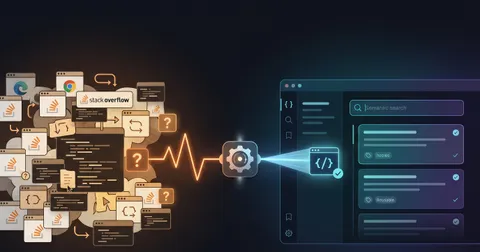
Building Your Personal Stack Overflow: A Knowledge Management Journey
A journey building issue-search-skill: capturing errors once, retrieving solutions forever. Local-first knowledge management that resolves recurring issues 12x faster.
Read article →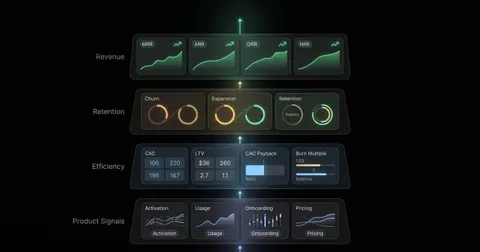
SaaS Metrics Stack: ARR, MRR & Churn You Can Actually Trust
How to build a SaaS metrics stack that produces ARR, MRR, churn, LTV, and CAC you can actually defend - with SQL, Python, and the right source-of-truth hierarchy.
Read article →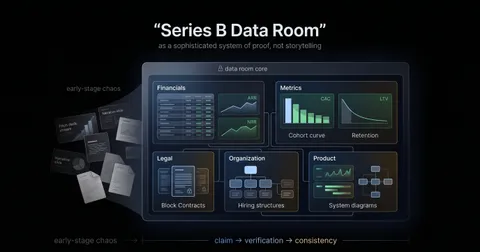
The Data Room That Helped Close Our Series B
How to build investor-grade revenue data infrastructure before a Series B raise - the stack, the metrics, the entity resolution problem nobody talks about.
Read article →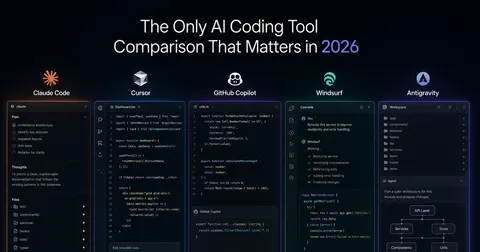
The Only AI Coding Tool Comparison That Matters in 2026
Most AI coding tool comparisons still reward the wrong things. A workflow-first breakdown of Claude Code, Cursor, Copilot, Windsurf, and Antigravity through the lens that actually matters: how teams ship under real constraints.
Read article →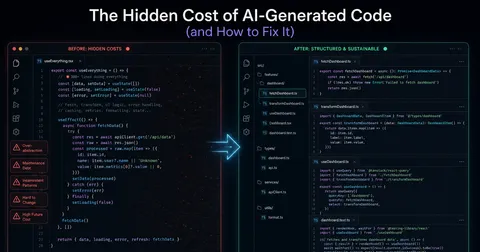
The Hidden Cost of AI-Generated Code (and How to Fix It)
AI-generated code feels fast, but the maintenance cost appears later. Why AI creates locally correct but globally fragile systems, and the engineering standards that fix it.
Read article →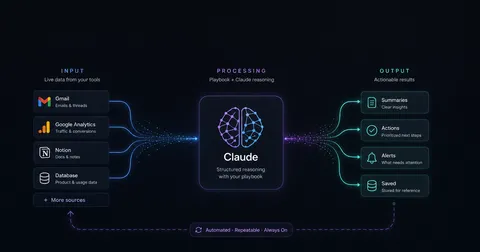
From Prompt to System: Building AI Workflows That Actually Run
Why one-off prompting does not compound, and how to move from isolated prompts to repeatable AI workflows using playbooks, MCP data sources, and action layers.
Read article →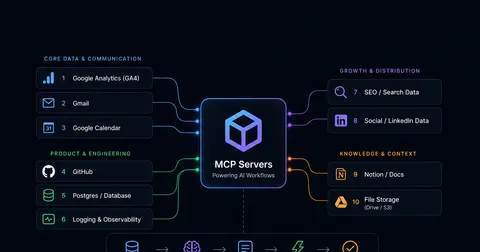
The 10 Most Valuable MCP Servers for Modern AI Workflows
The MCP servers that matter most for real AI leverage: analytics, email, calendar, GitHub, databases, observability, SEO, social, docs, and file storage. Plus practical playbooks for turning them into repeatable workflows.
Read article →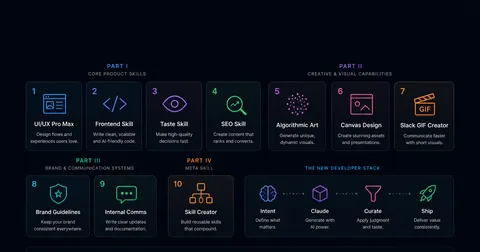
The Most Important Claude Code Skills for Modern Web Development
The 10 Claude Code skills that now separate developers who merely generate from those who ship differentiated products. From UI taste and frontend structure to brand systems and skill creation.
Read article →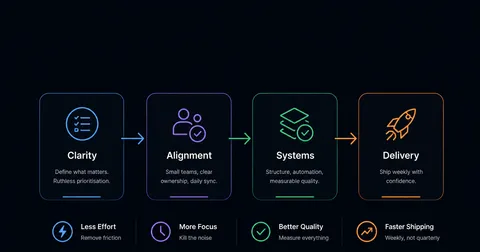
How I Increased Delivery Speed by Doing Less, Not More
The uncomfortable truth: faster delivery doesn't come from working harder. It comes from structure. How I went from 6-month delivery cycles to weekly releases by investing in the unglamorous side of engineering - org design, clarity, and ruthless prioritization.
Read article →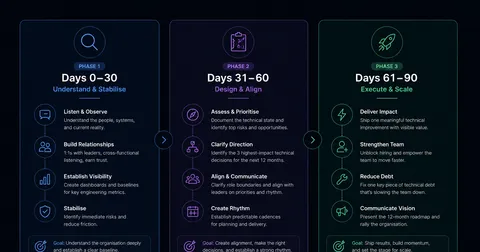
CTO First 90 Days: A Practical Framework for New Technical Leaders
A step-by-step playbook for the first 90 days as CTO or VP Engineering. How to listen, diagnose, align, and deliver quick wins without breaking the org.
Read article →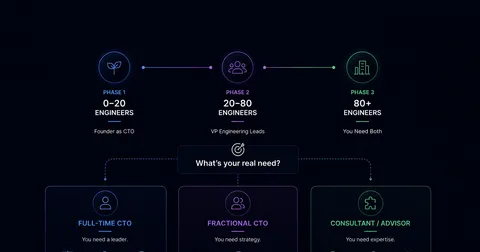
When Do You Need a CTO? A Founder's Decision Framework
The inflection point where you graduate from VP Engineering to full-time CTO. How to know when, why full-time vs fractional matters, and what to expect in the first 90 days.
Read article →I Built My Own Portfolio From Scratch (Here's What Bit Me)
A CTO's honest account of building a personal portfolio site from scratch - the decisions that made sense at the time, the bugs that didn't, and what I'd do differently.
Read article →Top 15 AI Voices I Actually Check on X in 2026
The 15 AI researchers, builders, and thinkers worth following on X in 2026. Cut through hype with voices from OpenAI, Meta, Stanford, and the venture ecosystem.
Read article →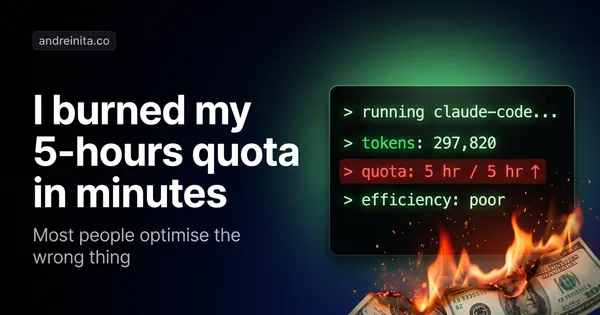
Cut Claude Code Token Usage by 60–90%: 16 Proven Techniques
Battle-tested techniques for .claudeignore, context compression, and multi-agent task splitting that cut token usage by 60–90% without losing Sonnet's predictive accuracy.
Read article →AI Unlocks Economics: How Founders Are Reshaping What's Fundable
AI fundamentally changed the unit economics of software development. Discover how the most successful Series A founders are architecting for this shift to win at better valuations.
Read article →Building API Dev Utils: A 400+ Tool Developer Platform
From a simple JSON formatter to a 400+ tool developer platform serving 100K+ users - the complete engineering journey covering architecture, zero-backend design, performance, and deployment.
Read article →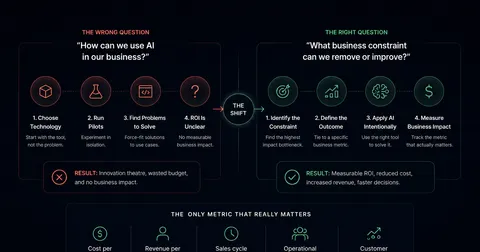
Why Most AI Strategies Fail to Produce ROI
After auditing dozens of AI programs, the pattern is identical: companies optimize for technical metrics that boards don't care about. Here's how to fix the framing.
Read article →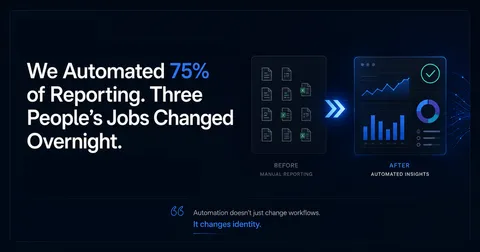
We Automated 75% of Reporting. Three People's Jobs Changed Overnight.
The tech worked perfectly. The people side broke. How we moved from "automate and forget" to "automate and elevate" - and why that distinction matters for every leader automating work.
Read article →How to Optimise Your LinkedIn Profile for Recruiters
A systematic framework for optimizing your LinkedIn profile so executive search recruiters find you - without a single cold message.
Read article →Cloud Cost Reduction Without Slowing Engineering: CTO Playbook
How to cut cloud spend 30–60% without freezing delivery velocity - using cloud credits, right-sizing, commitments, and platform guardrails that engineering teams actually adopt.
Read article →Showing 8 of 69 posts
You've read everything.
No posts in this category yet.